

Visual Art Must Communicate Visually
It may sound obvious, but it is worth repeating: visual art must communicate visually.
This does not mean that an artwork must reveal its full meaning at first look. Nor does it need to be beautiful, decorative, or immediately understood. But it should create an encounter before the viewer reads the wall text. It must offer something, a tension, an emotion, a question, a physical presence that makes us want to look closer.
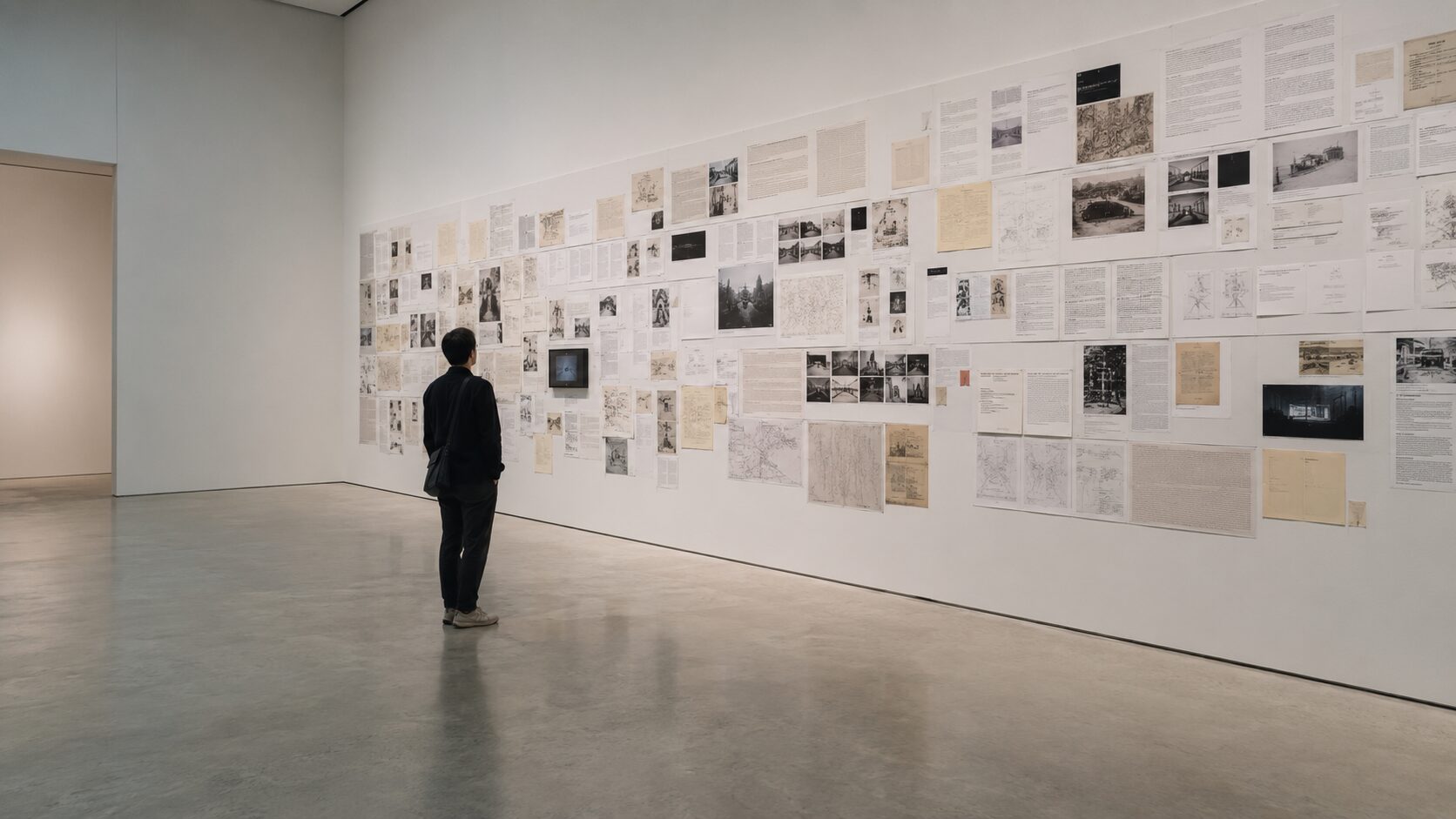
Many exhibitions today are built around research, archives, documents, statistics, and extensive explanations. These elements can be valuable. They can uncover overlooked histories, provide further context, and reveal the thinking behind an artist’s process. In conceptual art, the idea may even be more important than the finished object. But when the research becomes more important than its visual presentation, the exhibition risks becoming an academic paper displayed across the walls.
Visitors spend more time reading than looking. The artwork begins to function as evidence of a project that happened somewhere else, and its significance becomes visible only after a long explanation. Text should deepen an artwork, not rescue it.
We are also living in a culture shaped by speed, constant information, and distraction. This does not mean that art should imitate social media or reduce itself to an immediately consumable image. Art should resist speed and encourage sustained attention. But to do so, it must first earn that attention. Before asking viewers to invest time in its ideas, the work needs to give them a reason to stop.
Visual attraction does not simply mean beauty. It can emerge through scale, material, movement, discomfort, or strangeness.
This question becomes especially important when the art world speaks about reaching a wider audience. Contemporary art often claims to value accessibility while continuing to depend on specialist vocabulary and insider knowledge.
Too often, we blame the audience for “not understanding.” Sometimes, however, the artwork, or the way it has been presented, has simply failed to communicate.
Accessibility does not require simplifying ideas. A work can be intellectually complex and visually powerful at the same time. The visual experience should be the entrance to the idea: first we view the work, then we become curious, and finally we choose to discover more.
Visual art does not need to communicate everything at first sight. But it must communicate something. The explanation may complicate our first impression or reveal another layer, but the initial invitation should come from the visual itself.
Leave a Reply